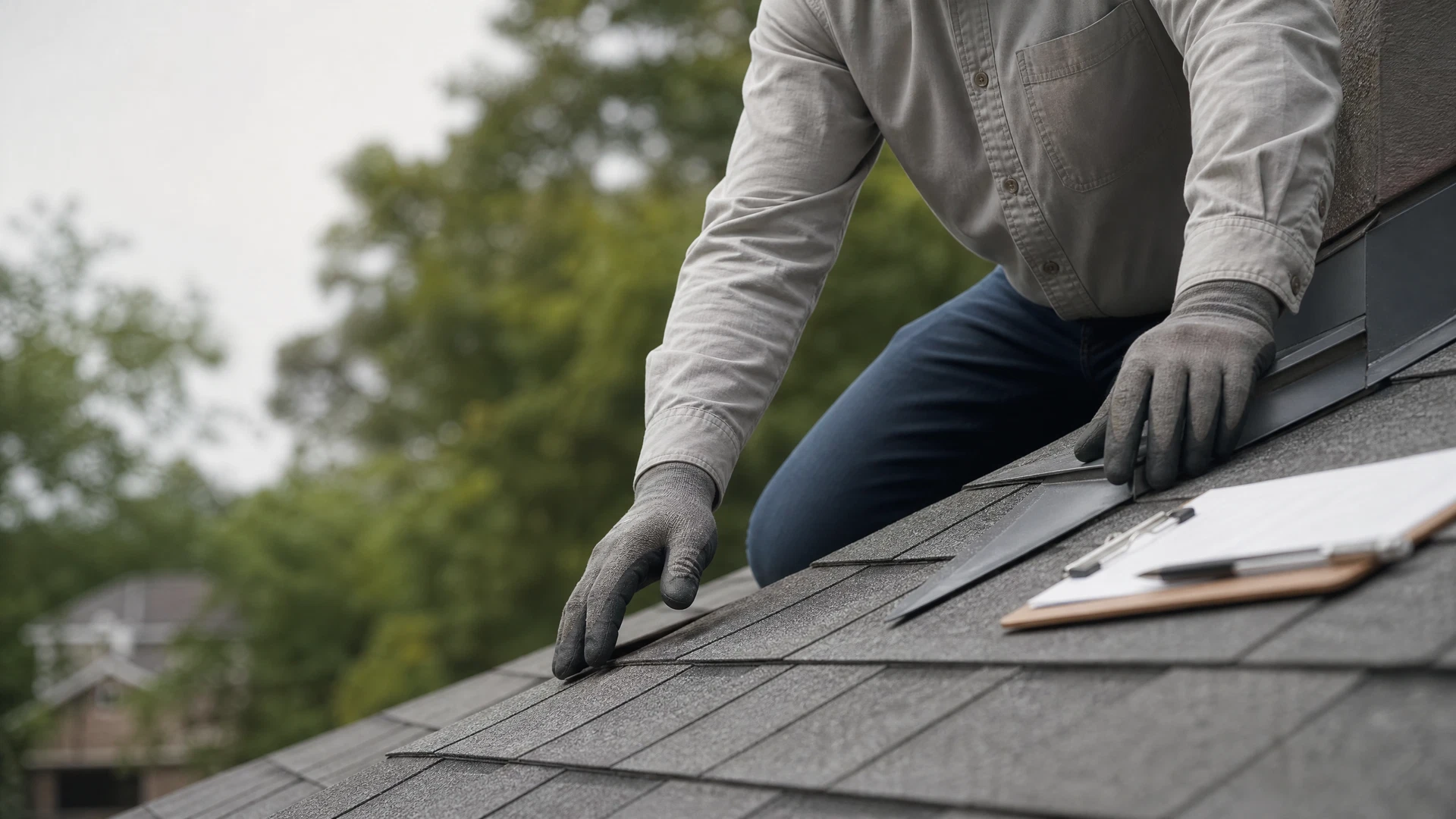
“Your roof is the first line of defense against severe weather.”
— Texas Department of Insurance, “Insurance and your roof”
A roof rarely announces a problem all at once. A lifted shingle, loose flashing edge, blocked gutter, or small ceiling stain can look manageable in isolation. In a humid, storm-prone climate, however, water can move from the roof covering into the deck, insulation, wall cavities, and ceiling finishes. The responsible response is not panic; it is a prompt, documented assessment that identifies the water path and stops it before conditions change.
The connected chain of neglect
Water intrusion can affect more than the visible finish below it. Persistently damp wood may deteriorate, insulation may lose effectiveness, and concealed voids can become more hospitable to insects and other pests. OSHA notes that mold can gradually damage building materials and, when left unchecked, can weaken moist wooden structural members. That is why a musty attic or a stain that grows after storms deserves a focused inspection rather than a cosmetic cover-up.
Leaks and humidity are different problems with the same evidence
A roof leak has a defined exterior entry point; a condensation problem may reflect ventilation, air leakage, or indoor moisture. Both can create dark staining, wet insulation, or odor in an attic. A qualified assessment should distinguish the source, document the condition, and recommend a repair scope. In Houston, the practical question is not whether rain occurs, but whether the roof assembly can shed water and manage moisture through the next period of heavy weather.
Pests, walking hazards, and what not to do
Roof and attic openings do not prove that an animal has entered, but gaps around vents, eaves, or damaged soffits merit inspection. Avoid climbing onto a wet, steep, damaged, or storm-affected roof. A wet surface, loose granules, debris, and a compromised edge increase fall risk. Start with a ground-level walk-around, interior observations, and photographs. A professional can determine whether close-up roof access is appropriate.
A calm response plan
After a storm, document visible conditions from safe locations, protect the interior from active water, save repair receipts, and avoid permanent work before an insurer has an opportunity to inspect a claim-related loss. This approach does not guarantee insurance coverage, but it creates a clearer record and helps prevent additional damage. Schedule periodic professional roof evaluations, especially after severe weather or when an attic shows moisture evidence.
Sources and further reading
Original sources are provided so you can review the complete guidance in context.
Next step
Ready to discuss a new roof?
Share the property basics and timing in a secure inquiry.