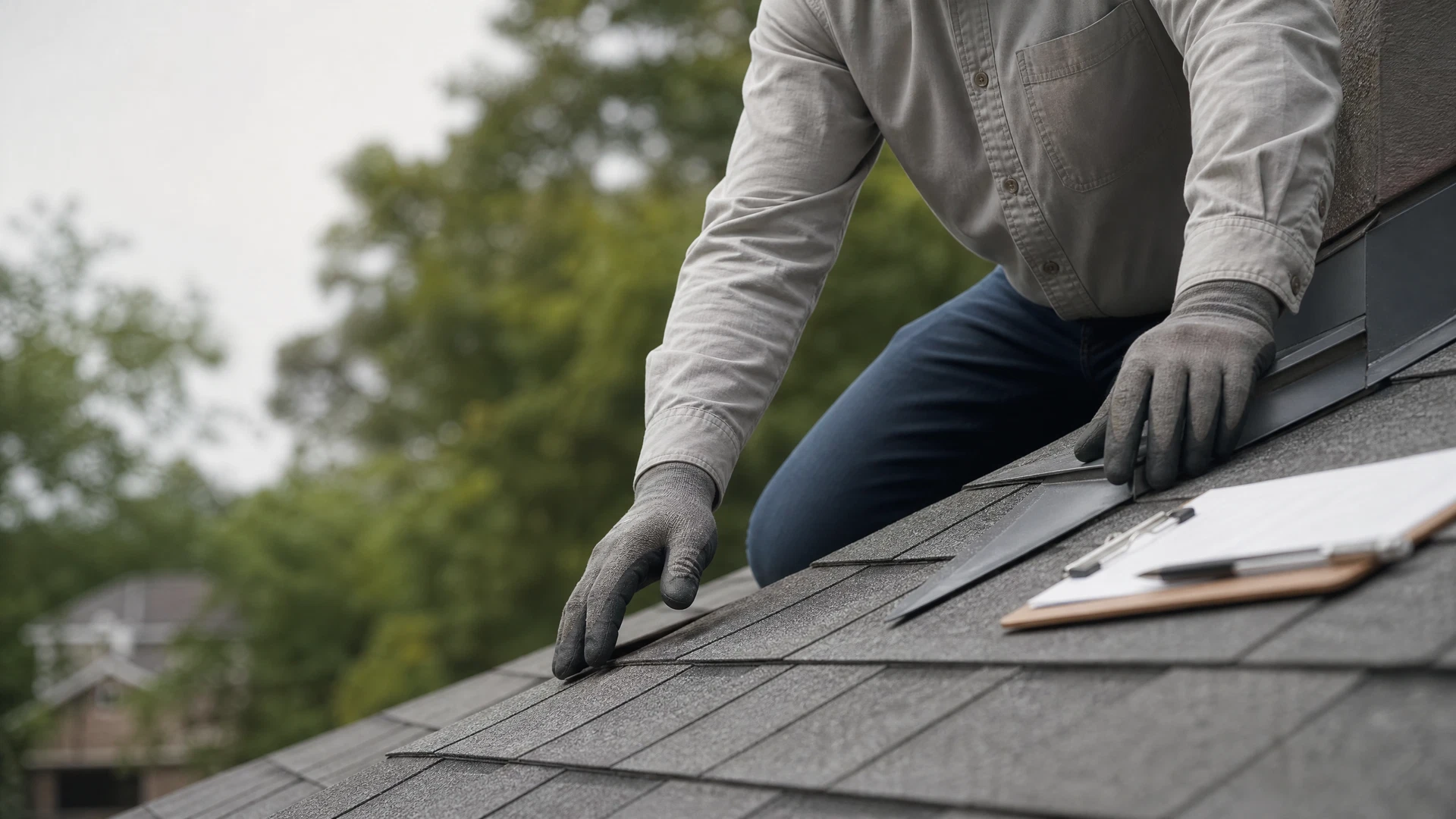
“Dark spots on the attic walls and underside of the roof deck can indicate the presence of moisture.”
— Mark Soto, GAF, “Understanding Roof Storm Damage”
A ceiling stain is evidence, not a diagnosis. Rainwater can travel along a deck seam, rafter, pipe, or insulation before it reaches the ceiling where a homeowner notices it. The visible spot may sit well away from the exterior opening. For that reason, painting over the stain or replacing one shingle without tracing the moisture path can defer rather than solve the problem.
Begin with safe observation
Look from the ground for missing, curled, or cracked shingles; displaced flashing; damaged gutters; and branch debris. Indoors, note the exact room, whether the mark changes after rain, and any musty odor. If the attic is accessible from an interior ladder, look for daylight through decking, dark streaks, damp insulation, or staining. Do not walk on the roof simply to investigate a stain.
Why storms change the picture
Wind-driven rain can enter at damaged flashing, lifted shingles, vents, or edges. Hail and debris can also affect roof components without leaving a clear hole. GAF's homeowner guidance lists interior water evidence, dark attic areas, wet insulation, and damaged flashing among the warning signs to assess after a storm. That is a sensible checklist—not a substitute for a full inspection.
Preserve the record and limit additional damage
For an active leak, collect photographs and short videos, record the approximate storm date, and make reasonable temporary efforts to protect belongings. Texas guidance advises homeowners to keep repair records and receipts and not make permanent repairs before an adjuster has seen claim-related damage. If mold or wet materials are involved, address the moisture source promptly and consult appropriate professionals for conditions outside a small, manageable area.
Questions for the inspection report
Ask a roofer to state the observed conditions, likely water path, recommended scope, materials proposed, photographs, and whether the repair addresses ventilation or drainage issues. The objective is a written, comparable scope. A responsible report makes future decisions about repair, replacement, or an insurance claim more transparent.
Sources and further reading
Original sources are provided so you can review the complete guidance in context.
Next step
Ready to discuss a new roof?
Share the property basics and timing in a secure inquiry.