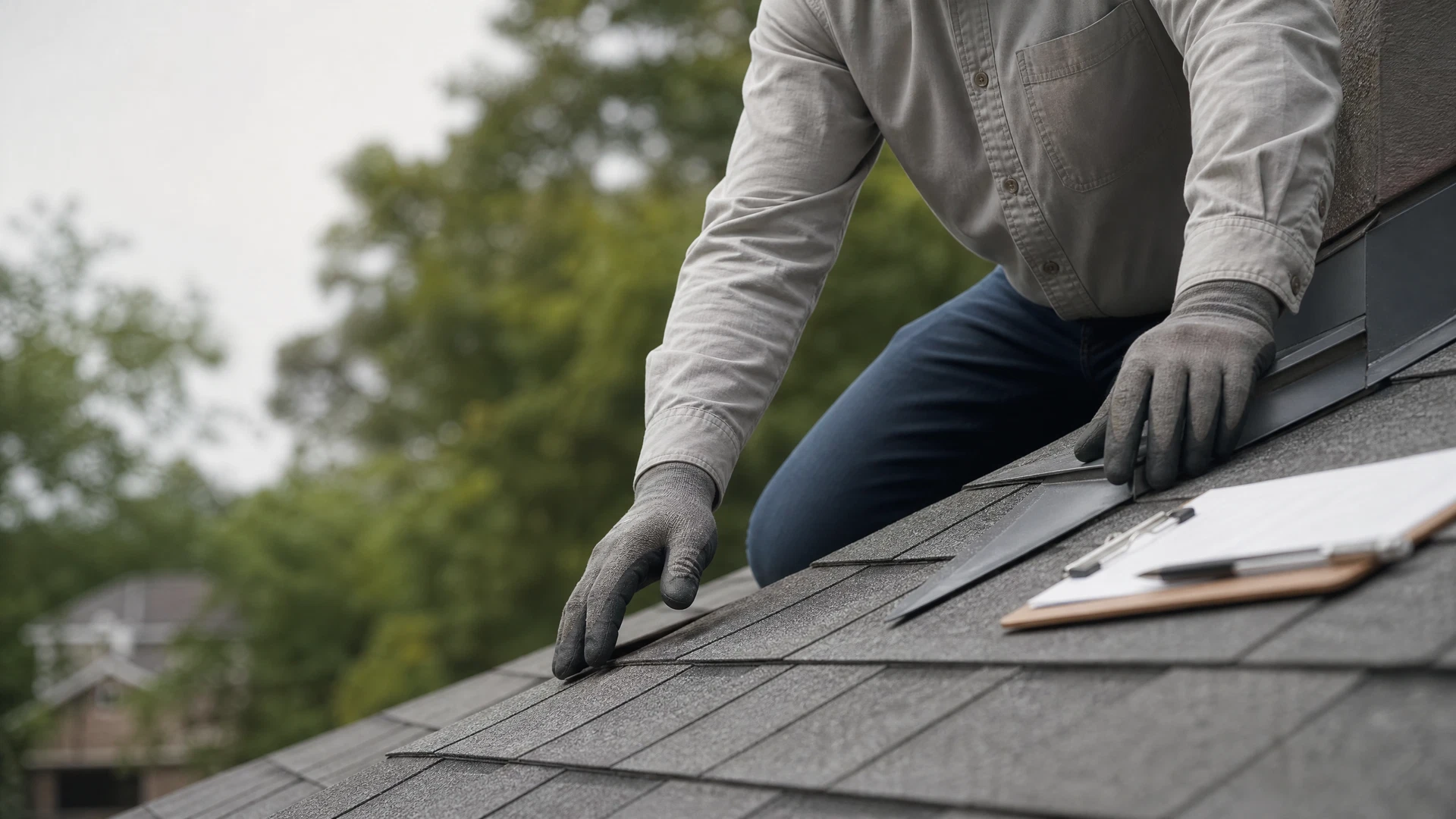
“If left unchecked, mold can eventually cause structural damage to a wood framed building, weakening floors and walls as it feeds on moist wooden structural members.”
— Occupational Safety and Health Administration, “A Brief Guide to Mold in the Workplace”
Wood rot is a condition that develops when wood remains wet long enough for deterioration to take hold. On a roof, this may be associated with a persistent leak, failed flashing, long-term condensation, or drainage problem. A sagging roofline, soft-feeling deck during a professional inspection, stained sheathing, or repeated interior water marks can all justify closer evaluation.
Do not confuse a roof covering with the roof structure
Shingles and metal panels are exterior coverings. Beneath them are underlayment, decking, framing, ventilation details, and interior finishes. A new covering may not resolve a deck or framing issue unless the scope includes inspection and replacement of compromised materials. Ask whether the quote includes deck replacement at a stated per-sheet price or whether those conditions are excluded.
Why Houston conditions require attention
Long periods of warm humidity and intense rainfall make moisture management an ongoing task. NOAA's record of Hurricane Harvey shows how exceptional rainfall can affect the Houston area, while everyday thunderstorms can expose small weakness in flashing, valleys, and roof penetrations. This is not an argument for replacing every roof after a storm; it is a reason to inspect and document visible changes.
A better conversation with a contractor
Ask the contractor to photograph any deteriorated sheathing and explain the cause they believe contributed to the condition. Ask which materials will be removed, which deck areas may need replacement, how new underlayment will be installed, and how flashing and ventilation details fit into the scope. A written answer helps distinguish a repair proposal from a vague promise.
Avoid delayed cosmetic fixes
Covering a ceiling stain without resolving the exterior source can hide the timeline that makes the problem easier to trace. Preserve documentation, seek a professional assessment when structural conditions are suspected, and keep the final repair records with the home's maintenance file.
Sources and further reading
Original sources are provided so you can review the complete guidance in context.
Next step
Ready to discuss a new roof?
Share the property basics and timing in a secure inquiry.